Major Breakthrough in Magnetic Confinement Fusion Achieves Sustained Net Energy Output
Leading international physics consortium confirms historic 120-second plasma stabilization producing unprecedented energy yields in clean fusion reactor trial.
Ask AI About This Story
Real-time contextual insights, local impact & analysis
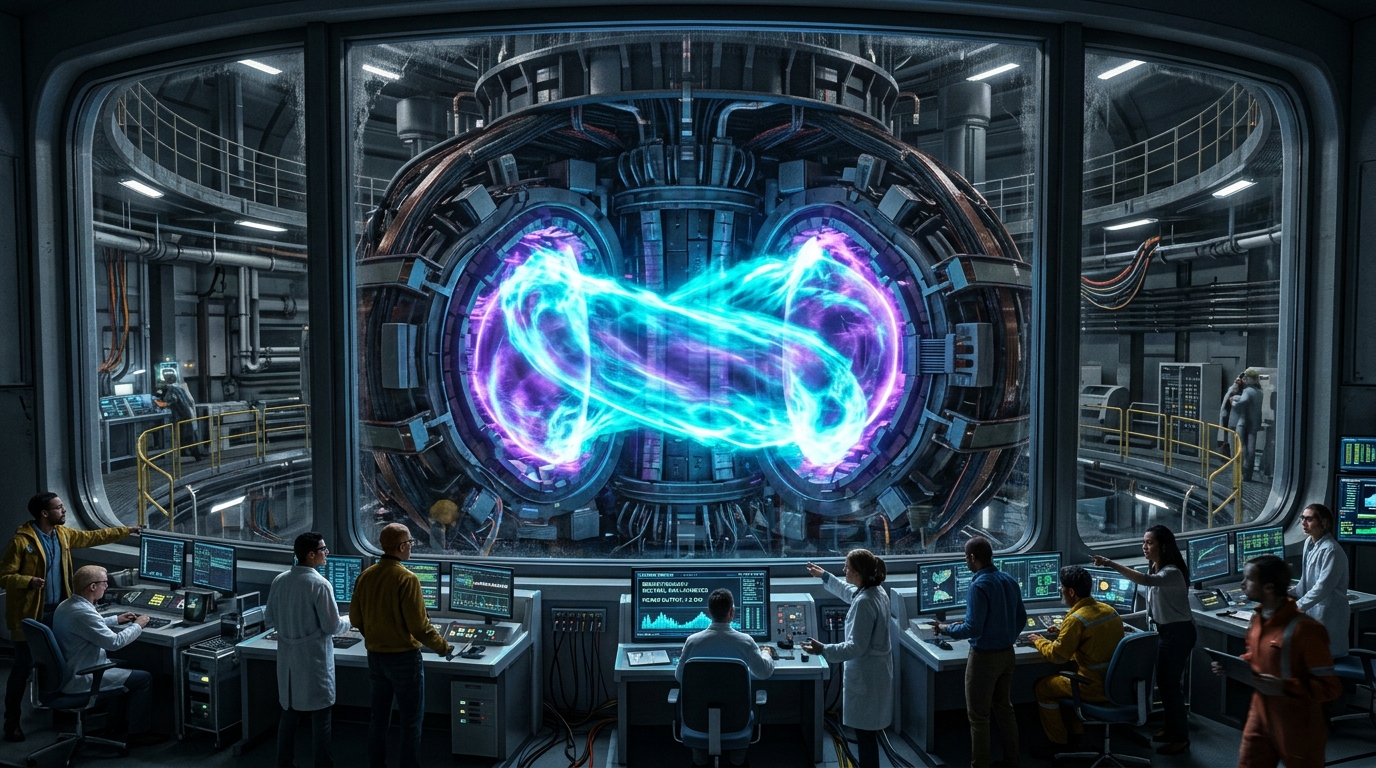
In what physicists are heralding as a transformative milestone toward inexhaustible zero-carbon baseload electricity, engineers operating an advanced spherical tokamak reactor achieved a sustained high-confinement mode (H-mode) plasma reaction exceeding 100 million degrees Celsius for over two consecutive minutes.
Crucially, the reaction yielded an energy amplification factor (Q) of 1.4, demonstrating repeatable net energy output under continuous magnetic confinement. The engineering breakthrough was made possible by newly integrated high-temperature superconducting (HTS) magnet arrays capable of generating magnetic field strengths exceeding 20 Tesla.
Commercial pilot facilities are now slated for preliminary grid synchronization testing within the coming decade, presenting a viable paradigm shift for clean global energy generation.