
James Webb Space Telescope Uncovers Ancient Galaxies Defying Early Universe Models
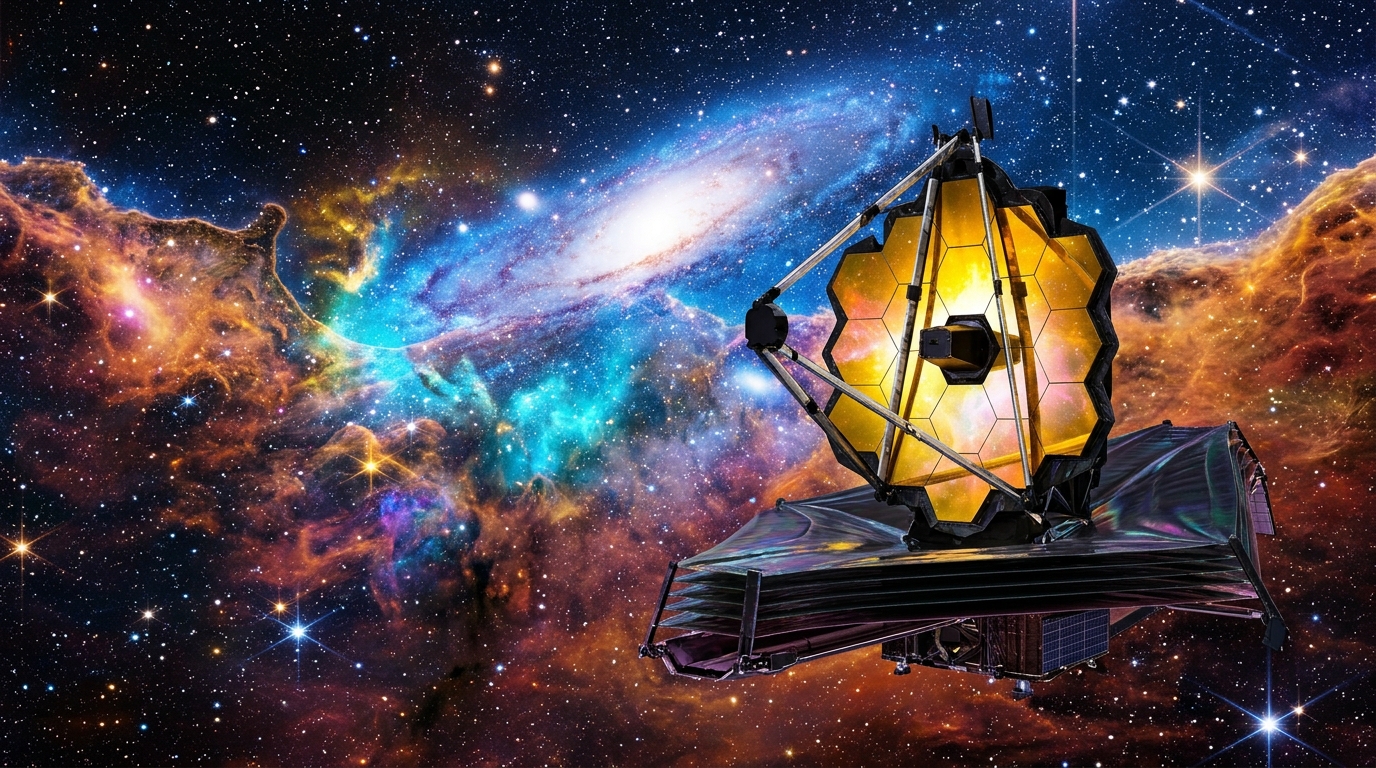
Astrophysicists analyzing deep-field infrared surveys confirm the discovery of luminous mature galaxies formed just 300 million years following the Big Bang, challenging long-standing cosmic formation timelines.
Ask AI About This Story
Real-time contextual insights, local impact & analysis
Deep space exploration has reached a watershed moment. International astrophysics teams utilizing the James Webb Space Telescope’s Near-Infrared Camera (NIRCam) have confirmed unprecedented observations of massive, fully structured spiral and elliptical galaxies dating to the earliest epochs of the cosmos.
These discoveries contradict previous hydrodynamic cosmological simulations, which posited that early galactic structures required billions of years of gravitational coalescence to reach such stellar mass and structural density. Spectroscopic confirmation across multiple ultra-deep fields indicates high rates of early star formation fueled by pristine primordial gas reserves.
The findings open new frontiers in theoretical astrophysics, calling for revised mathematical frameworks concerning dark matter halation, primordial density fluctuations, and supermassive black hole seed mechanics in the infant universe.